Civil Aviation Ticket Printing:What are the main international standards governing civil aviation ticket printing?
Q: What are the main international standards governing civil aviation ticket printing?
A: Civil aviation ticket printing is primarily governed by IATA Resolution 722 and the Montreal Convention of 1999, which set global standards for passenger tickets and baggage documentation. IATA's Passenger Services Conference resolutions define paper and electronic ticket formats, including the standard traffic document (STD) layout. According to IATA's 2023 Annual Review, over 99% of airline tickets are now issued electronically, reducing paper waste. The FAA in the U.S. also regulates ticket content under 14 CFR Part 221, requiring clear disclosure of terms. These frameworks ensure interoperability and consumer protection across global air travel.
Q: How has the transition from paper to electronic tickets impacted civil aviation ticket printing?
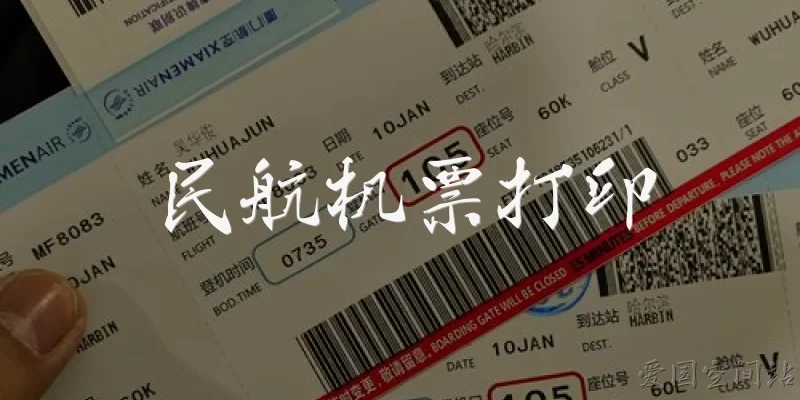
A: The transition to electronic tickets (e-tickets) has drastically reduced the need for physical ticket printing in civil aviation. IATA's Simplifying the Business program, launched in 2004, aimed to replace paper tickets with e-tickets, achieving 100% e-ticket adoption by 2008. According to IATA's 2022 Annual Report, this shift saved the industry over US$3 billion annually and eliminated more than 50,000 tons of paper. Today, paper tickets are largely limited to specific interline or government requirements. Printing now focuses on boarding passes and baggage tags, often using thermal printers, as outlined in IATA's Resolution 722g for standardized documents.
Q: What are the key security features in printed airline tickets?
A: Printed airline tickets, when still used, incorporate multiple security features to prevent fraud and forgery. According to IATA Resolution 722, these include watermarks, ultraviolet fibers, micro-printing, and unique serial numbers. The standard ticket stock also contains an IATA logo and a magnetic stripe for automated check-in. Government regulations, such as the U.S. FAA's 14 CFR Part 221, require tickets to show the passenger's name, itinerary, fare, and tax breakdown. Additionally, the Montreal Convention mandates that certain notices, like liability limits, appear on the ticket. These features ensure authenticity and protect both airlines and passengers from illegal alterations.
Q: What regulatory requirements dictate the content printed on a civil aviation ticket?
A: The content printed on a civil aviation ticket is strictly regulated by international and national authorities. The Montreal Convention of 1999 requires tickets to include the passenger's name, place and date of issue, departure and destination, and a notice of liability limits. IATA Resolution 722 specifies the standard layout, including fare calculation and taxes. In the U.S., 14 CFR Part 221 mandates clear disclosure of the full fare, including taxes and fees, and the airline's terms of carriage. The EU Regulation (EC) No 1008/2008 requires display of the final price and optional charges. These rules ensure transparency and consumer protection, with non-compliance leading to fines.
Q: How does the ICAO influence civil aviation ticket printing standards?
A: ICAO influences civil aviation ticket printing through its Annex 9 to the Convention on International Civil Aviation, which sets standards for facilitation, including passenger and baggage documentation. Although ICAO does not directly prescribe ticket printing formats, its guidelines on machine-readable travel documents (MRTDs) and advance passenger information (API) impact ticket data elements. According to ICAO Doc 9303, tickets must align with passport and visa data for seamless border control. Additionally, ICAO's 2021 Facilitation Manual encourages electronic data interchange, reducing paper tickets. These standards are implemented by member states and complement IATA's commercial specifications, ensuring global harmonization.
Dialogue about
Common scenarios of "Civil Aviation Ticket Printing"
【Passenger】 Hello, I'd like to print my flight ticket. I have a booking reference.
【Agent】 Good morning! Sure, I can help with that. Could you please provide your booking reference and a valid ID?
【Passenger】 Yes, my booking reference is ABC123, and here's my passport.
【Agent】 Thank you. Let me pull up your reservation. One moment, please.
【Passenger】 Sure, take your time.
【Agent】 I see your booking for flight CA1856 from Beijing to Shanghai. Is that correct?
【Passenger】 Yes, that's the one. Can I get a printed ticket?
【Agent】 Of course. Please note that most airlines now use e-tickets, but we can print a paper receipt for you. Would you like that?
【Passenger】 Oh, I thought I needed a physical ticket to board. So I just need the e-ticket?
【Agent】 Yes, with your e-ticket and ID, you can check in directly at the counter or use a self-service kiosk. But I can print an itinerary receipt for your records.
【Passenger】 I see. Then please print the itinerary receipt. Is there a fee for that?
【Agent】 No, it's complimentary. I'll print it right away. Would you also like a baggage tag?
【Passenger】 Yes, please. I have one checked bag.
【Agent】 Alright, I'll print the receipt and baggage tag. Please wait a moment.
【Passenger】 Thank you. Also, can I choose my seat now?
【Agent】 Seat selection is usually done during check-in, which opens 24 hours before departure. But I can check if there are any available seats to assign now.
【Passenger】 That would be great. I prefer an aisle seat if possible.
【Agent】 Let me check... Yes, we have aisle seat 23C available. Would you like me to assign it?
【Passenger】 Perfect, please assign that. And is the flight on time?
【Agent】 The flight is currently on schedule. Here are your printed receipt and baggage tag. Your seat 23C is confirmed. Have a nice flight!
【Passenger】 Thank you so much for your help!