Domestic carry-on baggage regulations:What are the general size and weight limits for domestic carry-on baggage?
Q: What are the general size and weight limits for domestic carry-on baggage?
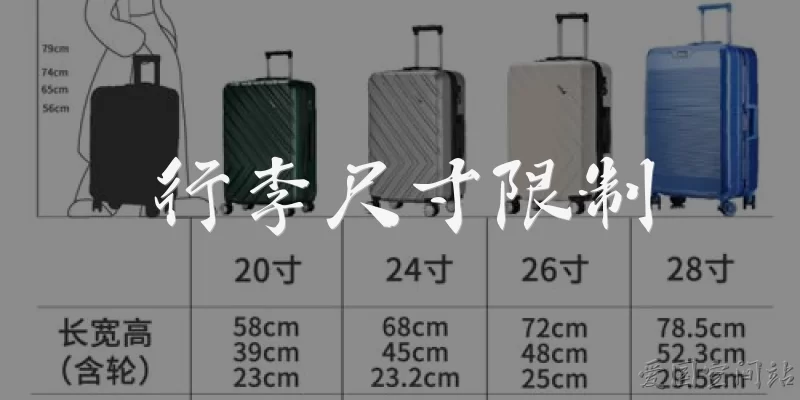
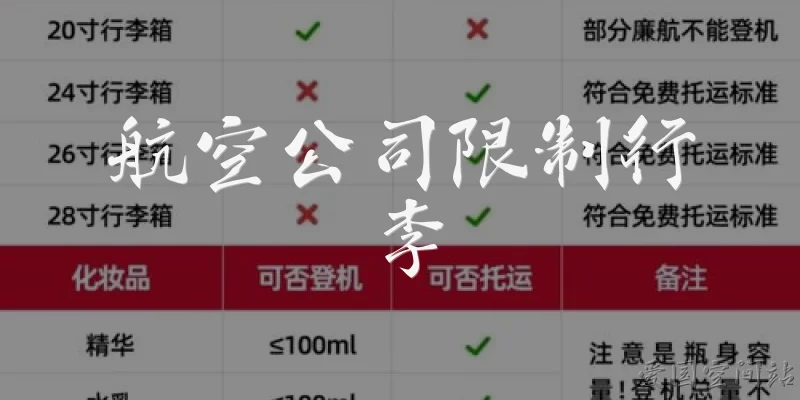
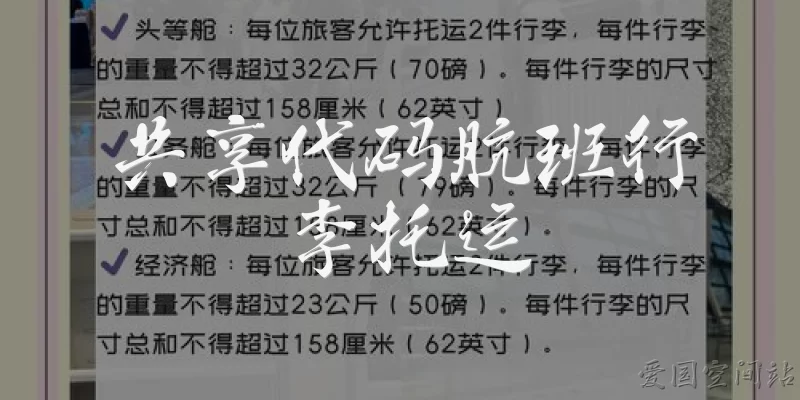
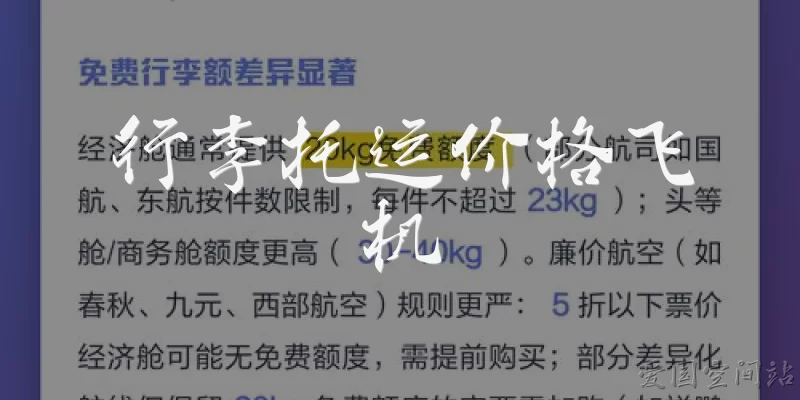
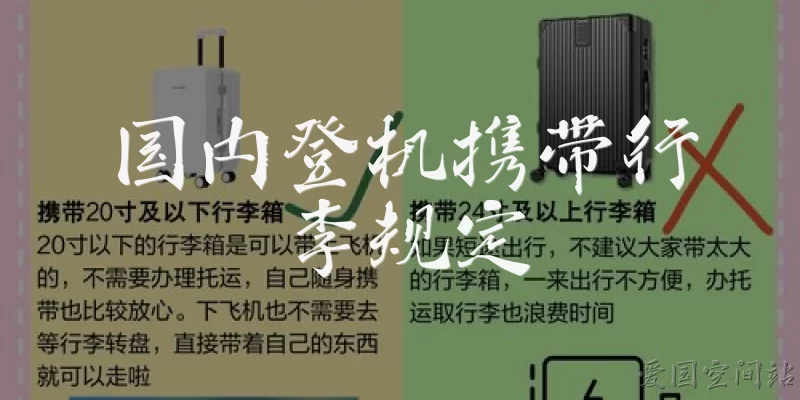
A: Domestic carry-on baggage regulations typically set a maximum size of 22 x 14 x 9 inches (56 x 36 x 23 cm), including handles and wheels. Weight limits vary by airline, but most major domestic carriers allow between 15 and 22 pounds (7 to 10 kg) per bag. Some airlines, especially low-cost carriers, enforce stricter limits and may weigh bags at the gate. It is crucial to check your specific airline's policy before flying, as exceeding these limits can result in fees or forced checking of your bag. Additionally, one personal item such as a purse, laptop bag, or small backpack is usually permitted in addition to the main carry-on, provided it fits under the seat in front of you.
Q: Are there restrictions on liquids in domestic carry-on baggage?
A: Yes, domestic carry-on baggage regulations follow the 3-1-1 rule for liquids, aerosols, gels, creams, and pastes. Each container must be 3.4 ounces (100 milliliters) or less. All containers must fit into a single clear, quart-sized plastic bag, and each passenger is allowed one such bag. This bag must be removed from your carry-on and placed in a bin for screening at the security checkpoint. Exceptions exist for medically necessary liquids, baby formula, and breast milk, which can exceed 3.4 ounces but must be declared to security officers. Duty-free liquids purchased after security may also be allowed, but they must remain in a sealed, tamper-evident bag with the receipt.
Q: Can I bring food and beverages in my domestic carry-on?
A: Solid food items, such as sandwiches, fruit, and snacks, are generally allowed in domestic carry-on baggage. However, liquids and gels, including yogurt, pudding, soup, and drinks, must comply with the 3-1-1 rule for liquids. Beverages purchased after the security checkpoint are permitted on board. If you are traveling with powdered substances, such as protein powder or spices, they may require additional screening. It is also important to note that some items like creamy cheeses, peanut butter, and sauces are considered liquids or gels and are subject to the 3.4-ounce limit. Always check the TSA or your country's equivalent security agency for the most up-to-date rules, as policies can change.
Q: What electronic devices are allowed in domestic carry-on, and how should they be packed?
A: Most electronic devices, including laptops, tablets, e-readers, cameras, and cell phones, are allowed in domestic carry-on baggage. Larger electronics like laptops must be removed from your bag and placed in a separate bin for X-ray screening. Smaller devices can remain in your bag but should be easily accessible if additional screening is needed. Spare lithium batteries and power banks must be carried in carry-on, not checked baggage, and should be protected from short circuits by keeping them in original packaging or taping the terminals. There are watt-hour limits for lithium batteries (usually 100 Wh or less without approval). Drones and other specialized electronics may have additional restrictions, so verify with your airline before packing.
Words of experience
Common scenarios of "Domestic carry-on baggage regulations"
【Traveler】 Hi, I'm flying domestically tomorrow and I'm not sure what I can bring in my carry-on. Can you help?
【Agent】 Of course! I can help with that. What specific items are you concerned about?
【Traveler】 First, liquids. I have a bottle of shampoo and some hand sanitizer. Are those allowed?
【Agent】 Liquids, aerosols, and gels are allowed in carry-on, but each container must be 3.4 ounces (100 milliliters) or less. They all must fit in a single quart-sized clear plastic bag. One bag per passenger.
【Traveler】 So my 8-ounce shampoo bottle won't be allowed?
【Agent】 Correct. Anything larger than 3.4 ounces must go in checked luggage. You could transfer some shampoo into a smaller travel-sized bottle.
【Traveler】 Got it. What about electronics like my laptop and power bank?
【Agent】 Laptops are fine in carry-on; you'll need to remove them from your bag at security. Power banks are allowed in carry-on only, not in checked bags. But there are limits on watt-hours: usually up to 100 Wh without approval, and up to 160 Wh with airline approval.
【Traveler】 My power bank is 20,000 mAh. Is that okay?
【Agent】 Let's convert: 20,000 mAh at 3.7V is about 74 Wh, which is under 100 Wh, so it's fine.
【Traveler】 Great. What about food? Can I bring snacks like yogurt or a sandwich?
【Agent】 Solid foods are generally allowed. Yogurt is a liquid/gel, so it must follow the 3.4 oz rule. A sandwich is fine.
【Traveler】 And what about medication? I have prescription pills and a liquid medicine.
【Agent】 Medication is allowed in carry-on. Liquid medication is exempt from the 3.4 oz rule but you should declare it at security. Pills are fine.
【Traveler】 Okay. What about sharp objects like scissors or a pocket knife?
【Agent】 Scissors with blades shorter than 4 inches from the pivot point are allowed. Pocket knives are generally not allowed in carry-on; they must be in checked baggage.
【Traveler】 I see. And what about batteries in general? Like AA batteries?
【Agent】 Standard alkaline batteries like AA are allowed in carry-on and checked bags. Lithium batteries must be in carry-on only.
【Traveler】 Thanks! One last thing: can I bring a lighter?
【Agent】 Disposable and Zippo lighters are allowed in carry-on, but not in checked baggage. However, torch lighters with a blue flame are prohibited in both.